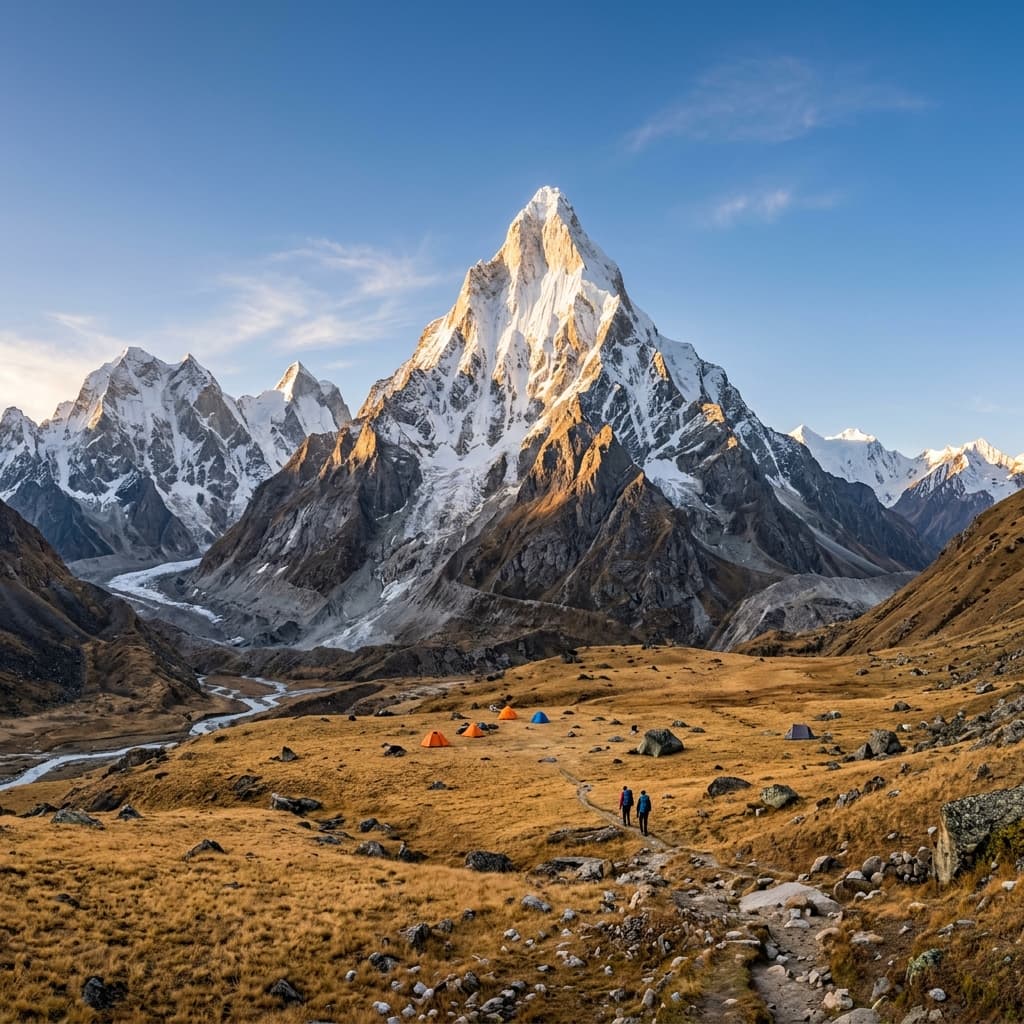
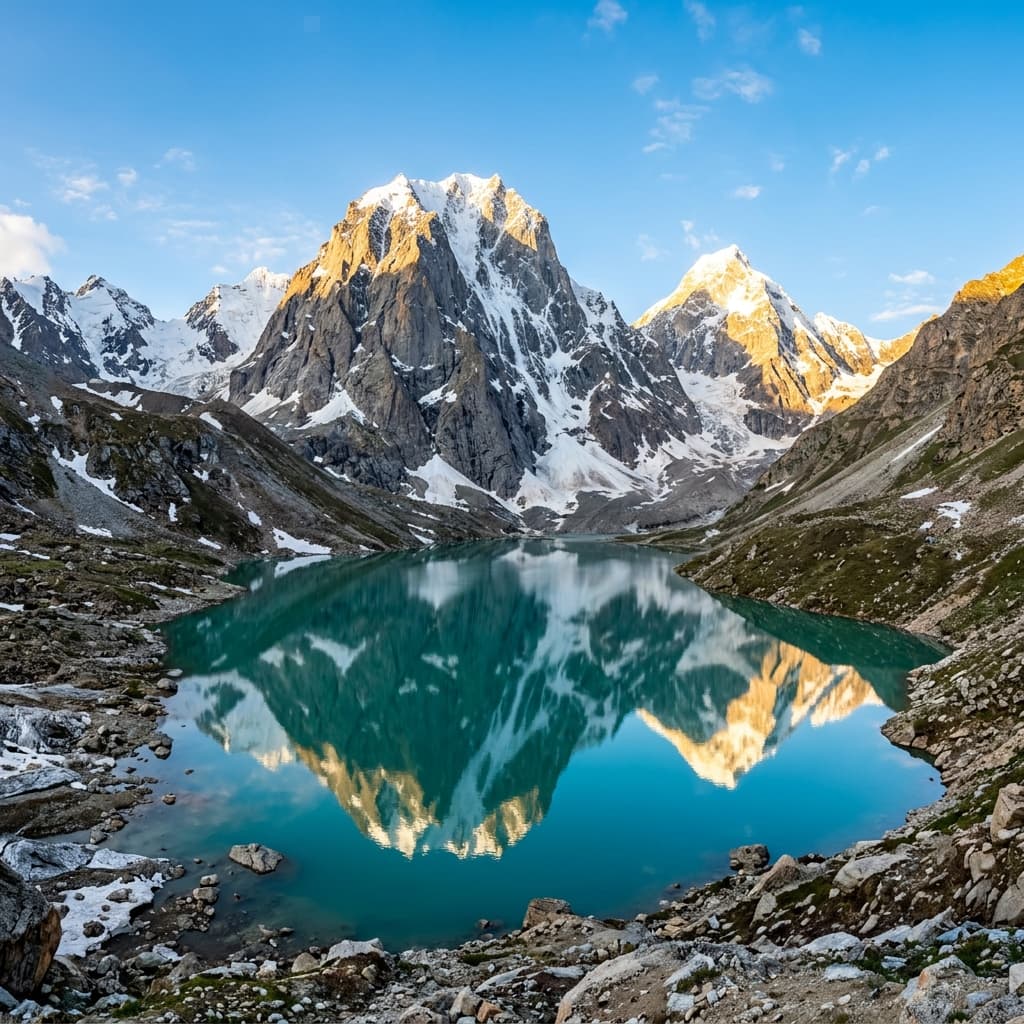
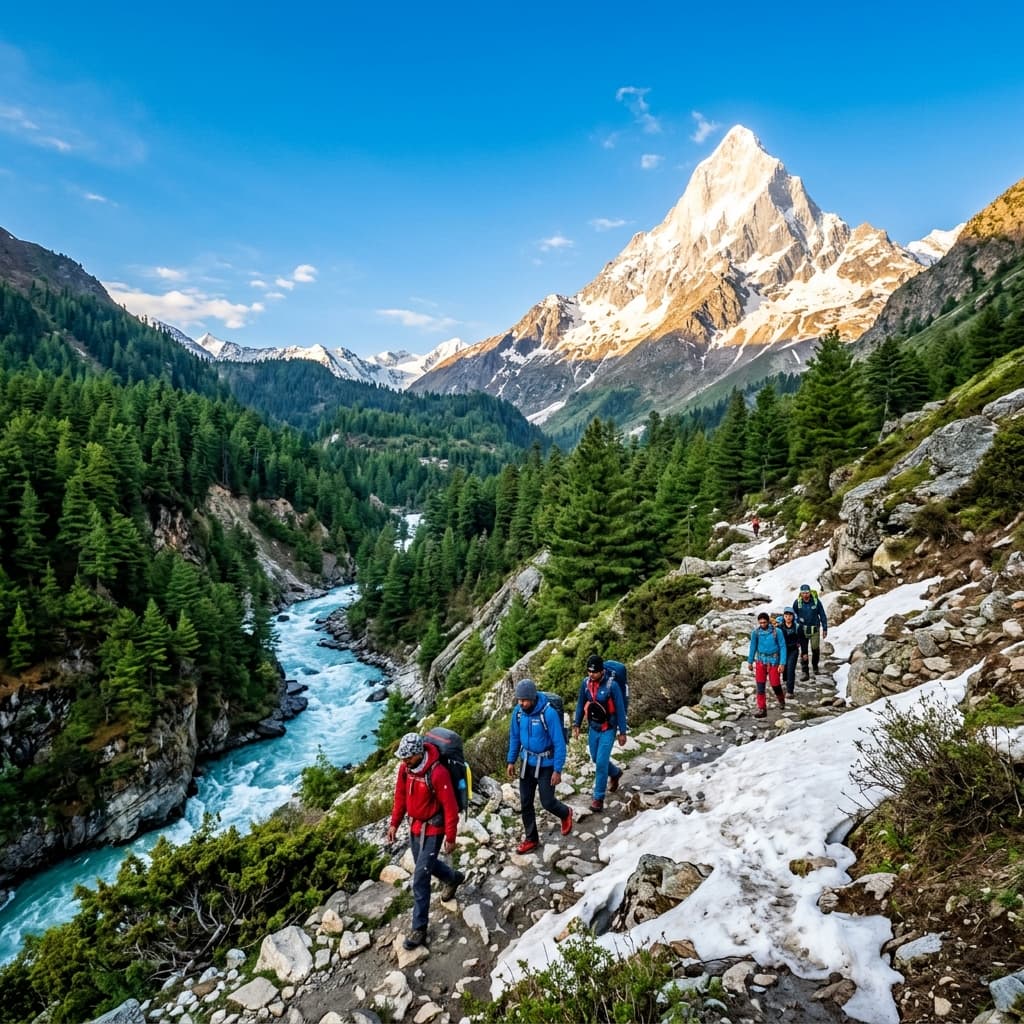
Packing for high-altitude treks in the Gangotri region — such as Gaumukh-Tapovan, Kedartal, Nandanvan, or Kalindi Khal — is a delicate balance between survival safety and weight management. Temperatures above 12,000 feet routinely drop below freezing, while terrain transitions from muddy pine forest trails to loose rock moraines, scree slopes, and ice bridges.
Under-packing can lead to hypothermia and frostbite, while over-packing creates unnecessary physical fatigue on steep ascents like Spider Wall. In this comprehensive 2026 packing guide, we detail the exact gear specifications, clothing layers, footwear standards, and medical kits recommended by professional Garhwal expedition guides.
1. Essential Gear Summary Table
| Gear Category | Item Name | Technical Specification / Rating | Priority Level |
|---|---|---|---|
| Insulation Outer | Heavy Down Jacket | 700+ Fill Power (Comfort rated -10°C) | Mandatory |
| Weather Shell | Hardshell Jacket & Pants | 20,000 mm Waterproof / Windproof rating | Mandatory |
| Base Layer | Thermal Top & Bottom | 100% Merino Wool or Heavy Synthetic | Mandatory |
| Footwear | Waterproof Trekking Boots | High-ankle support + Deep Vibram Lugs | Mandatory |
| Traction | Microspikes & Gaiters | 12-spike stainless steel + Waterproof canvas | Mandatory (May/Early June) |
| Sleeping Bag | Sub-Zero Sleeping Bag | -10°C to -15°C Comfort Limit Rating | Mandatory (Unassisted) |
| Trekking Poles | Anti-Shock Poles | Aluminum / Carbon Fiber flip-lock pair | Mandatory |
| Headlamp | LED Headlamp | 300+ Lumens with spare batteries / USB charge | Mandatory |
2. The 4-Layer Alpine Clothing System
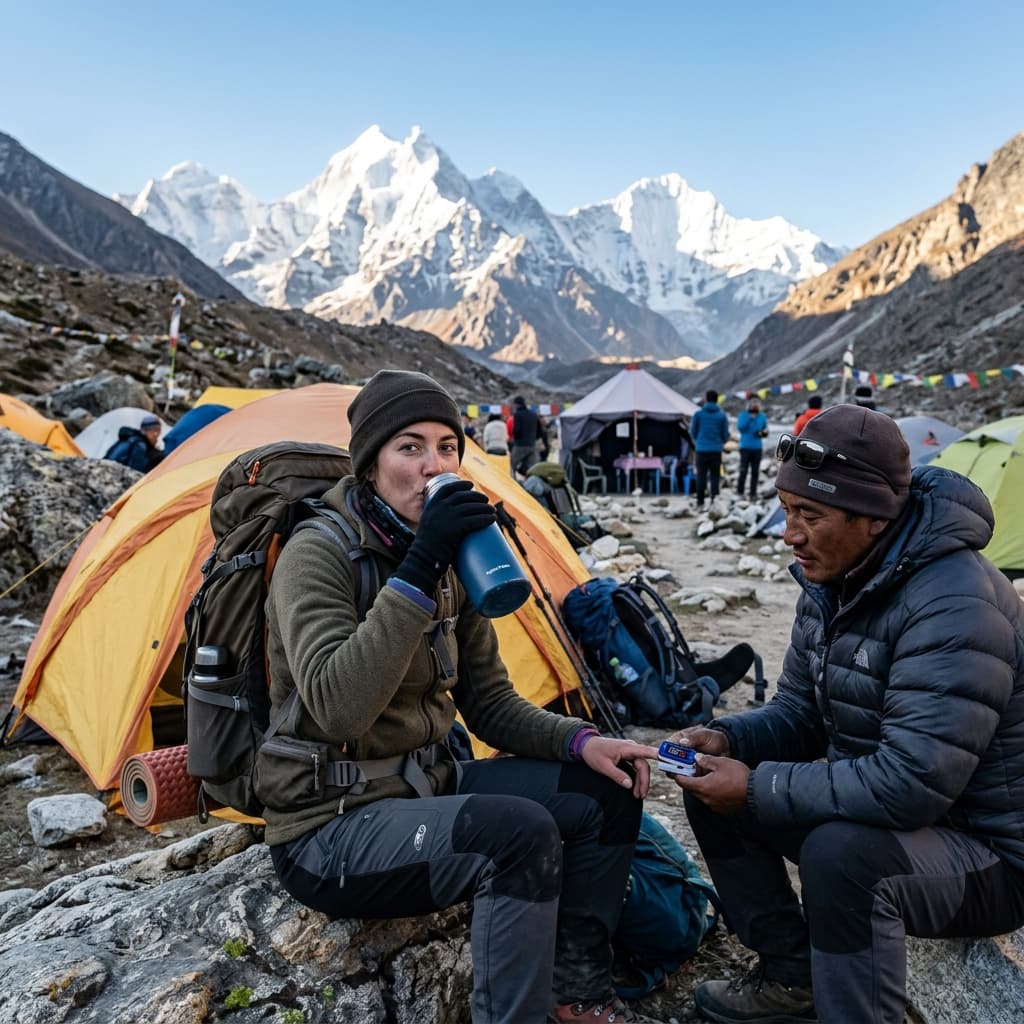
The secret to staying warm in the Himalayas is layering. Instead of one heavy coat, wear multiple breathable layers that trap warm air and can be adjusted as your body temperature changes during steep ascents:
Layer 1: Moisture-Wicking Base Layer (2 Sets)
Thermal tops and bottoms worn directly against skin. Never wear cotton — cotton retains sweat, cools down rapidly, and accelerates hypothermia. Choose 100% Merino Wool (200 gsm) or synthetic polyester thermals.
Layer 2: Insulating Mid-Layer (1–2 Jackets)
A 200-gsm fleece jacket or lightweight grid fleece sweater. Traps body heat while allowing moisture from your base layer to escape.
Layer 3: Heavy Sub-Zero Outer Insulation (1 Jacket)
A 700+ fill-power down jacket with an attached hood. Essential for evenings at campsites like Tapovan (14,600 ft) and Kedar Kharak (14,000 ft) where temperatures drop to -10°C.
Layer 4: Weather Protection Shell (1 Jacket & Pants)
A breathable, 20,000 mm waterproof and windproof hardshell jacket (Gore-Tex or Pertex). Protects against sudden Himalayan rain squalls, snow, and high winds on exposed ridges.
3. High-Altitude Footwear & Traction
Your feet are your single most critical asset on the trail:
- Waterproof High-Ankle Boots: Boots must provide firm ankle support to prevent sprains on loose moraine rocks. Look for rubber toe caps and deep Vibram rubber lug soles.
- Break-In Requirement: Never wear brand-new boots on Day 1. Break them in for at least 2 to 3 weeks on pre-trek walks to avoid severe blisters.
- Merino Wool Socks: 4 pairs of thick cushioned merino wool socks + 2 pairs of thin liner socks.
- Microspikes & Gaiters: Essential during May and June for crossing snow bridges near Gaumukh and frozen slopes near Kedartal.
4. Sub-Zero Sleeping System Ratings
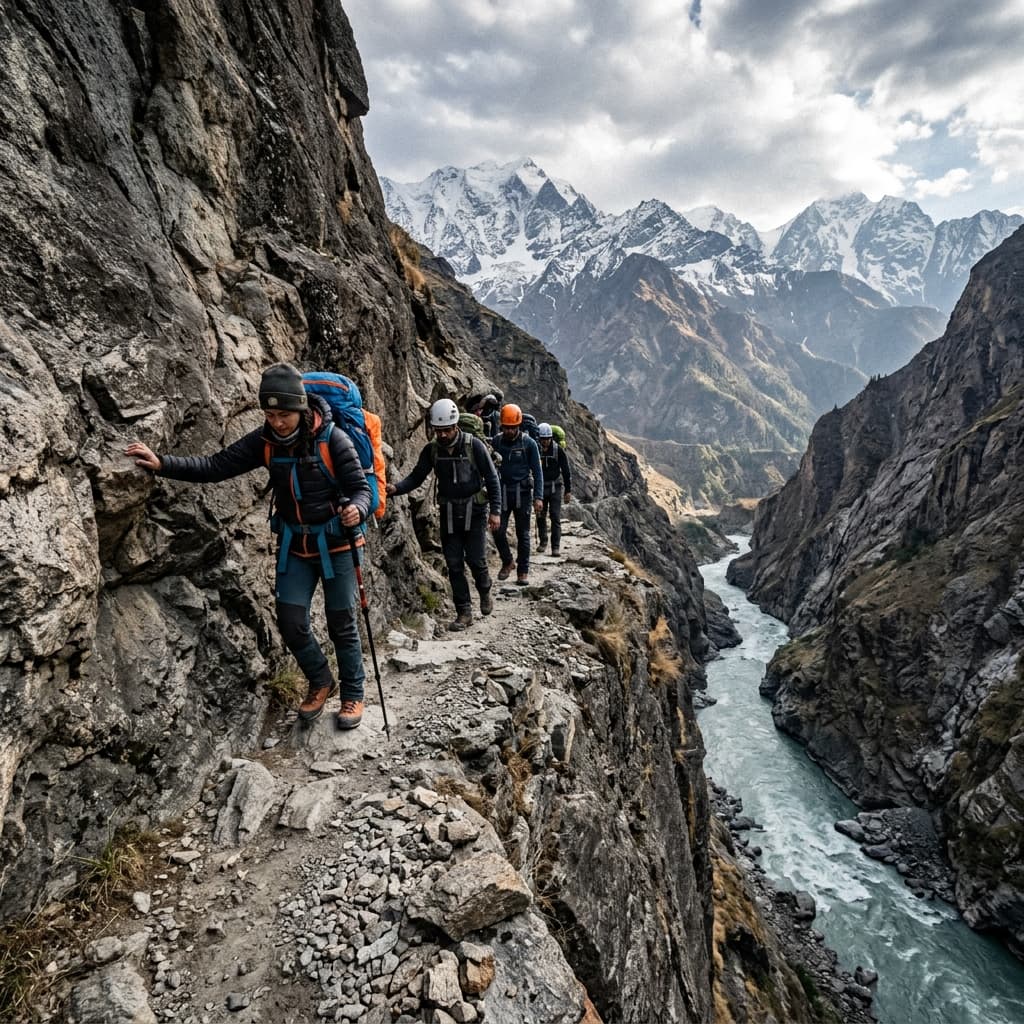
When camping in tents at Bhojbasa, Tapovan, or Kedar Kharak, night temperatures drop well below freezing:
- Sleeping Bag Rating: Ensure your sleeping bag has a 'Comfort Rating' of -10°C (not just an 'Extreme Rating'). Down bags offer superior warmth-to-weight ratio over synthetic bags.
- Insulated Sleeping Pad: Cold ground robs body heat faster than cold air. Use a foam or inflatable sleeping pad with an R-Value of 3.5 or higher.
5. Backpack Load & Rucksack Specs
| Pack Type | Volume Capacity | Target Pack Weight | Key Features |
|---|---|---|---|
| Main Trekking Rucksack | 50 to 65 Liters | 10 kg to 12 kg (Max) | Internal aluminum frame, padded hip belt, rain cover |
| Summmit / Day Pack | 20 to 30 Liters | 3 kg to 5 kg | Hydration bladder sleeve, external trekking pole loops |
6. Medical Kit & Water Purification
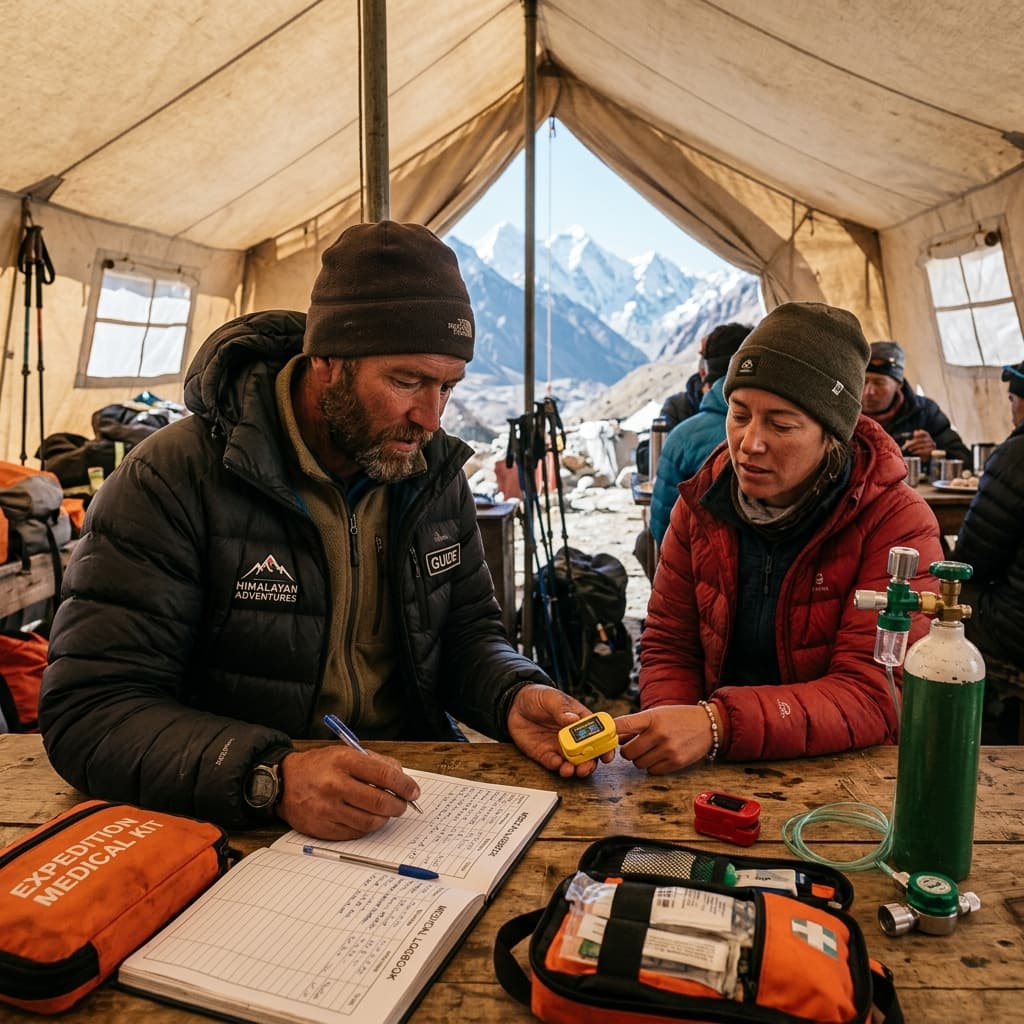
Every trekker must carry a compact personal first-aid pouch containing:
- Prescription Medications: Diamox (Acetazolamide) for AMS, Ibuprofen / Paracetamol for muscle aches, Ondansetron for nausea, and Azithromycin antibiotic.
- Wound & Blister Care: Moleskin blister pads, crepe bandage, antiseptic ointment, and leukotape.
- Water Purification: Portable squeeze filter (Sawyer Squeeze or Katadyn BeFree) + Chlorine Dioxide purification tablets for river water.
7. Eyewear, Lighting & Electronics
- Category 4 Glacier Glasses: High-altitude snow reflects up to 85% of UV radiation. Category 3 or 4 UV400 sunglasses with side shields prevent painful snow blindness.
- LED Headlamp (300+ Lumens): Required for early 4:00 AM starts on Gaumukh or Kedartal summit days. Carry extra lithium batteries.
- Power Bank (20,000 mAh): Sub-zero temperatures drain phone and camera batteries rapidly. Keep devices inside your sleeping bag at night.
- Sun Protection: Sunscreen SPF 50+, broad-brimmed sun hat, and UV neck gaiter (buff).
8. FAQs & Local Gear Rental Tips
Q1: Can I rent trekking gear in Uttarkashi or Gangotri?
Yes. Uttarkashi town has reliable trekking gear rental shops where you can rent down jackets (-10°C), waterproof trekking boots, gaiters, and trekking poles.
Q2: Are trekking poles really necessary?
Yes. Dual trekking poles reduce impact on your knees by up to 25% during steep descents like Spider Wall and provide critical stability over moraine rocks.
Q3: Should I carry a sleeping bag if I trek with an agency?
When trekking with The Himalayan Trail, high-altitude sub-zero sleeping bags, liners, and insulated tents are provided. You only need to bring your personal clothing and boots.
Unsure about your gear? Our expedition team conducts mandatory gear inspections at Uttarkashi basecamp before every trek to ensure all gear meets high-altitude safety standards.