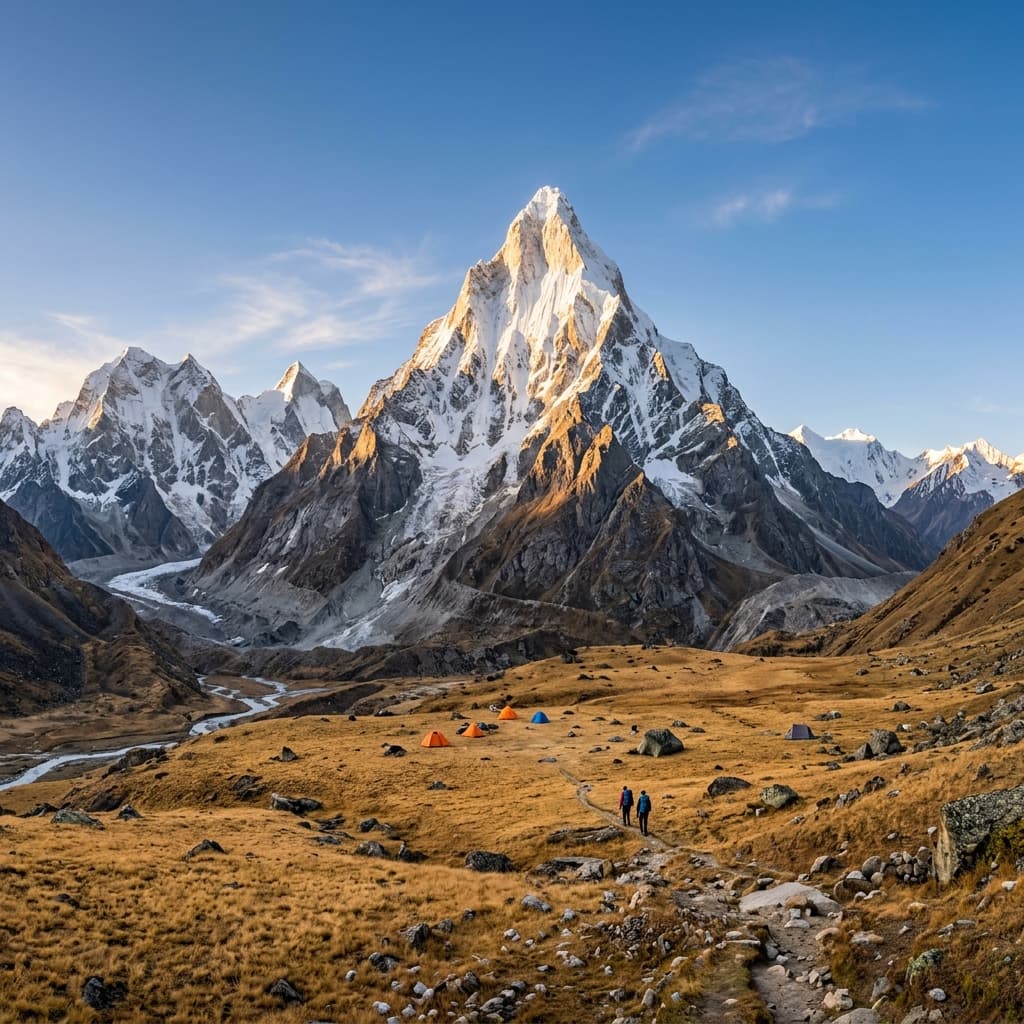
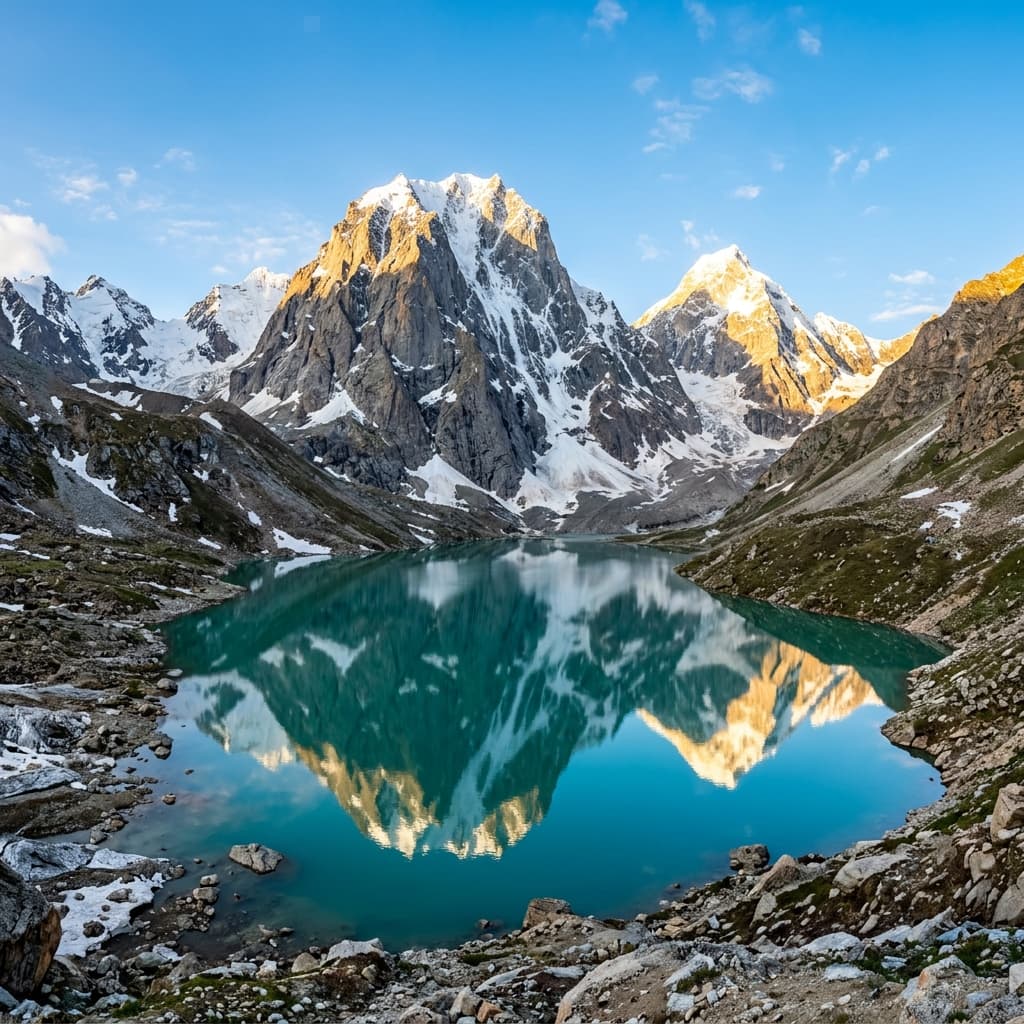
At sea level, the air we breathe contains roughly 21% oxygen at an atmospheric pressure of 760 mmHg. By the time you reach Gangotri basecamp (3,100 m / 10,170 ft), atmospheric pressure drops by nearly 30%. At Tapovan (4,460 m) or Kedartal (4,750 m), effective oxygen availability drops to nearly 55% of sea level.
Acute Mountain Sickness (AMS) does not care about your gym bench press, marathon times, or age. It is a biological reaction to rapid changes in barometric pressure. In this high-altitude medical protocol guide, we outline the exact ascent schedules, physiological warning signs, pulse oximeter thresholds, hydration targets, and descent rules required for safe trekking in the Gangotri region.
1. Acclimatization Profile Table
| Stage & Location | Elevation (m / ft) | Effective O2 Level | Target SpO2 Range | Mandatory Action |
|---|---|---|---|---|
| Rishikesh / Dehradun | 340 m / 1,120 ft | 100% | 98% – 100% | Base staging point |
| Uttarkashi Town | 1,158 m / 3,800 ft | 88% | 95% – 98% | Mandatory 1-night stopover en route |
| Gangotri Dham | 3,100 m / 10,170 ft | 72% | 88% – 93% | Mandatory 24-hr acclimatization walk |
| Bhojbasa Campsite | 3,800 m / 12,450 ft | 66% | 82% – 88% | Hydrate 4L daily; steady slow pacing |
| Tapovan Plateau | 4,460 m / 14,630 ft | 58% | 78% – 84% | Rest afternoon; monitor night breathing |
| Kedartal Glacial Lake | 4,750 m / 15,580 ft | 55% | 75% – 82% | Day visit / descend to lower camp |
| Kalindi Khal Pass | 5,948 m / 19,520 ft | 47% | 68% – 76% | Technical expedition; bottled O2 backup |
2. High-Altitude Physiology
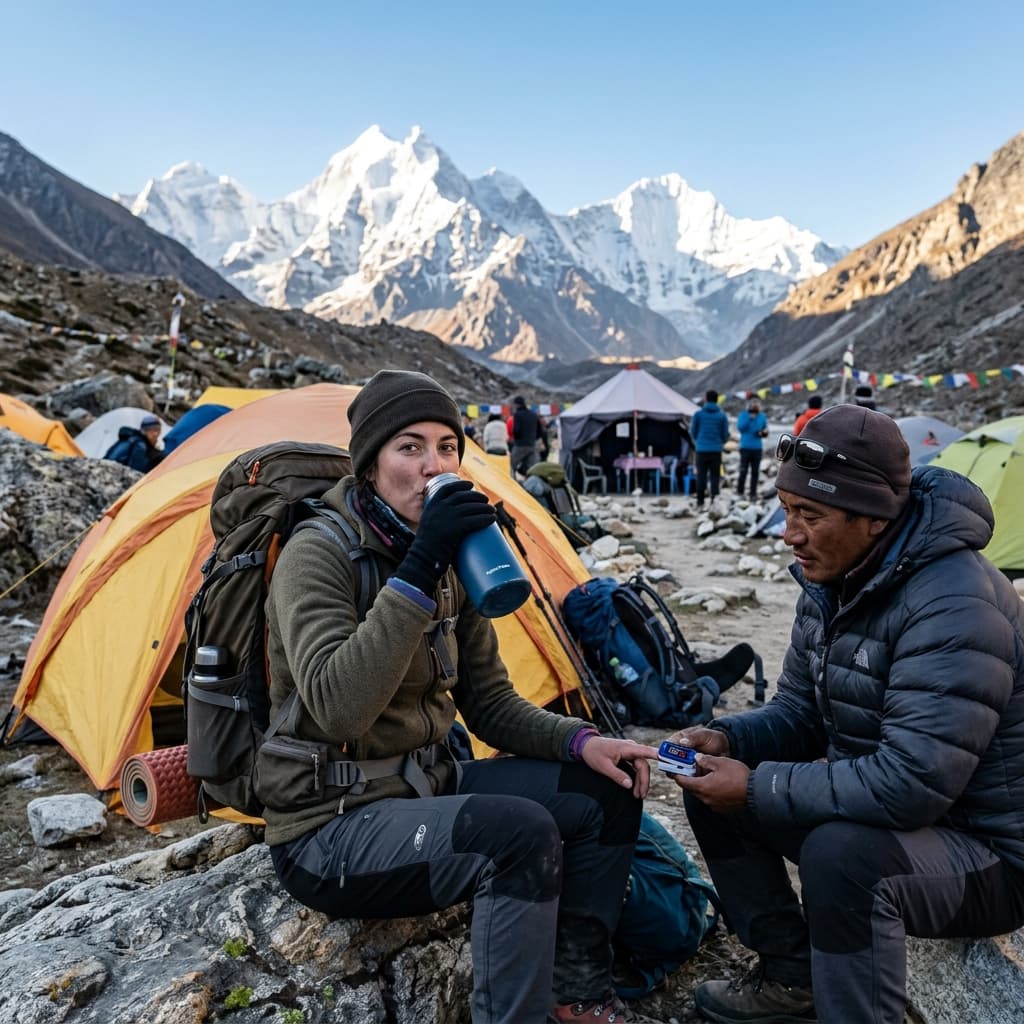
When you ascend above 8,000 feet (2,400 m), the reduced partial pressure of oxygen triggers hypoxia. To compensate, your brain signals your lungs to breathe faster and deeper (hyperventilation), while your heart increases cardiac output. Over 48 to 72 hours, your kidneys secrete bicarbonate to balance blood pH, and your bone marrow produces extra red blood cells.
Acclimatization is simply giving your body enough time to make these physiological adjustments. If you gain sleeping elevation faster than your body can adapt, fluid begins leaking into bodily tissues, leading to AMS, HAPE, or HACE.
3. Recognizing AMS, HAPE, and HACE
Altitude illness exists on a spectrum from mild discomfort to life-threatening emergencies:
1. Mild to Moderate AMS (Acute Mountain Sickness)
- Primary Symptom: Throbbing frontal or occipital headache that does not respond to basic painkillers.
- Associated Symptoms: Loss of appetite, nausea, dizziness, fatigue, and insomnia.
- Action Required: Stop ascending immediately. Rest, hydrate, and monitor. Do not gain sleeping elevation until symptoms completely resolve.
2. HAPE (High Altitude Pulmonary Edema) — LIFE-THREATENING
HAPE occurs when fluid accumulates in the lungs' air sacs (alveoli). It can progress rapidly within 12 hours if ignored.
- Key Symptoms: Extreme breathlessness while resting at camp, persistent dry cough progressing to pink frothy sputum, gurgling or rattling sound in chest, blue fingernails/lips (cyanosis).
- Action Required: Immediate descent by 1,000+ meters. Administer high-flow supplemental oxygen. HAPE is a medical emergency.
3. HACE (High Altitude Cerebral Edema) — CRITICAL EMERGENCY
HACE occurs when fluid causes swelling in the brain tissue. It leads to coma and death if not treated immediately.
- Key Symptoms: Severe loss of physical coordination (Ataxia — inability to walk a straight line heel-to-toe), irrational behavior, confusion, slurred speech, hallucinations.
- Action Required: Immediate descent with stretcher/mule assist, Dexamethasone administration, and emergency evacuation.
4. The Gangotri Route Ascent Profile
A common mistake made by beginner trekkers is flying or driving directly from Delhi (216 m) to Gangotri (3,100 m) in 24 hours. Gaining nearly 2,900 meters of elevation in one day leads to a high rate of altitude sickness on Day 1.
The Gold Standard Gangotri Ascent Schedule:
- Day 1: Drive Dehradun to Uttarkashi (1,158 m / 3,800 ft). Overnight stay in Uttarkashi.
- Day 2: Drive Uttarkashi to Gangotri (3,100 m / 10,170 ft). Rest afternoon; 2 km acclimatization walk to Surya Kund.
- Day 3: Gangotri Acclimatization Walk (Climb High, Sleep Low): Walk up 300m toward Chirbasa, rest at height, return to Gangotri for sleep.
- Day 4: Gangotri (3,100 m) to Chirbasa (3,600 m) or Bhojbasa (3,800 m) — Sleep elevation gain capped at 700 m.
- Day 5: Bhojbasa to Tapovan (4,460 m) — Steep climb; rest full afternoon at Tapovan camp.
5. Hydration & Diamox Protocol
Hydration Guidelines
At high altitude, cold dry air forces your lungs to vaporize significant water with every breath. Aim for 4 to 5 liters of fluid per day (mix water with ORS electrolytes, warm soups, and herbal teas). Check your urine color — it should remain pale to clear.
Diamox (Acetazolamide) Medication Guidelines
Diamox is a carbonic anhydrase inhibitor that forces the kidneys to excrete bicarbonate, acidifying the blood. This tricks your brain into breathing faster, accelerating natural acclimatization.
- Standard Dosage: 125 mg to 250 mg twice daily (every 12 hours), starting 24 hours prior to reaching 10,000 ft (Gangotri).
- Common Side Effects: Tingling sensation in fingers/toes (paresthesia), increased urination, carbonated drinks tasting flat. These are harmless.
- Contraindication: Do NOT take Diamox if you have a known allergy to Sulfa-based drugs.
6. Pulse Oximeter & Daily Health Audits
On all The Himalayan Trail expeditions, our certified trek leaders conduct mandatory medical checkups twice daily (morning & evening):
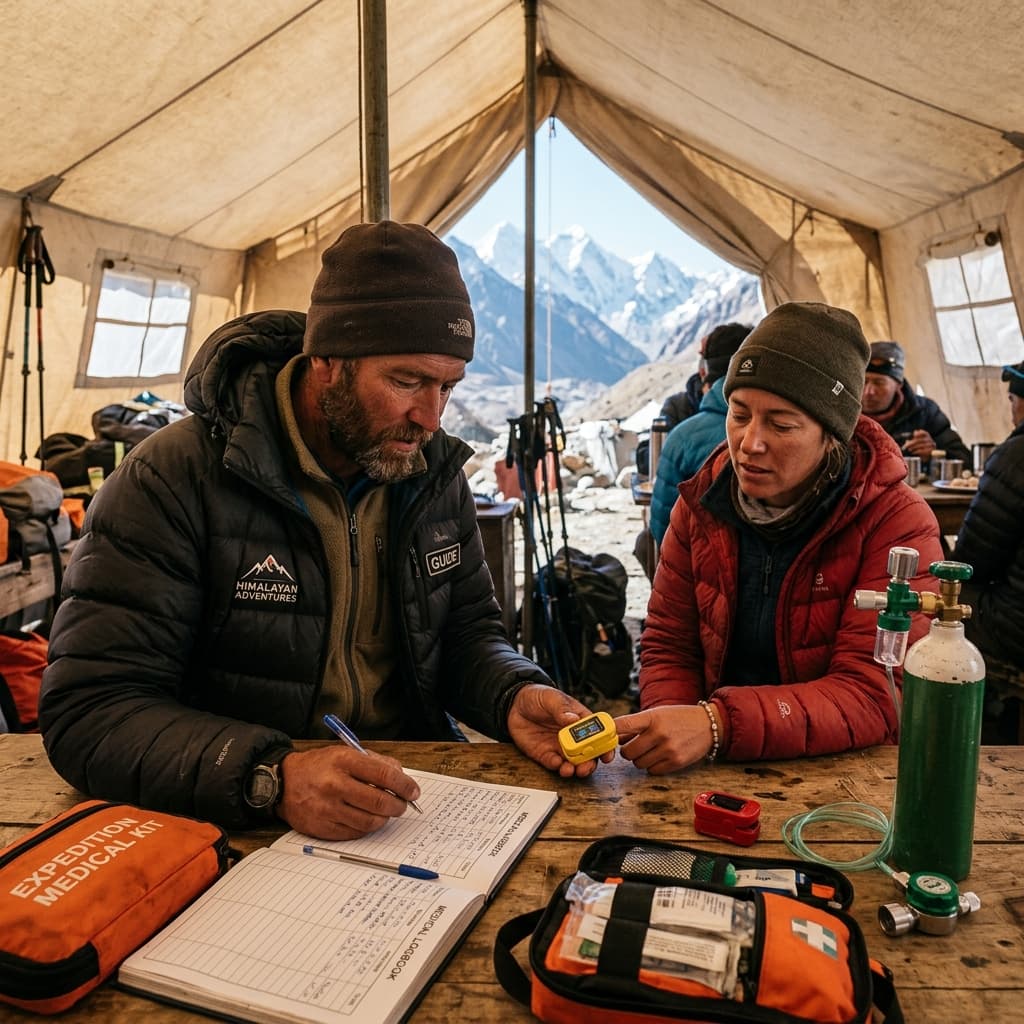
- SpO2 Monitoring: Blood oxygen saturation is measured at rest. A reading above 85% at 10,000 ft and above 78% at 14,000 ft indicates healthy acclimatization.
- SpO2 Red Flags: SpO2 dropping below 72% accompanied by a resting heart rate above 110 bpm requires immediate rest, supplemental oxygen, and potential descent.
- Lake Louise AMS Scorecard: Trekkers self-rate headache, nausea, fatigue, and dizziness on a scale of 0 to 3.
7. Non-Negotiable Evacuation Protocol
“Golden Rule of Mountain Medicine: Never ascend with symptoms of AMS. If symptoms worsen, descent is mandatory, non-negotiable, and immediate.”
Descending just 500 to 1,000 meters dramatically increases ambient barometric pressure and effective oxygen availability, reversing AMS symptoms within hours. Support horses and emergency stretchers are maintained at Bhojbasa and Gangotri checkposts for rapid evacuation.
8. FAQs & Wilderness Medical Tips
Q1: Does physical fitness prevent AMS?
No. Physical fitness helps you carry your backpack, but high-altitude acclimatization is governed by genetics, age, and rate of ascent. Fit marathon runners can get AMS if they ascend too quickly.
Q2: Can I consume alcohol or sleeping pills at high altitude?
Strictly no. Alcohol dehydrates the body and depresses breathing during sleep. Sleeping pills suppress respiratory drive, worsening nighttime hypoxia.
Q3: Are oxygen cylinders carried on the trek?
Yes. All our commercial group departures carry portable medical oxygen cylinders and medical emergency kits.
Your safety is our absolute priority. The Himalayan Trail equips every Gangotri trek with WFR-certified guides, pulse oximeters, daily health logbooks, and medical emergency evacuation logistics.