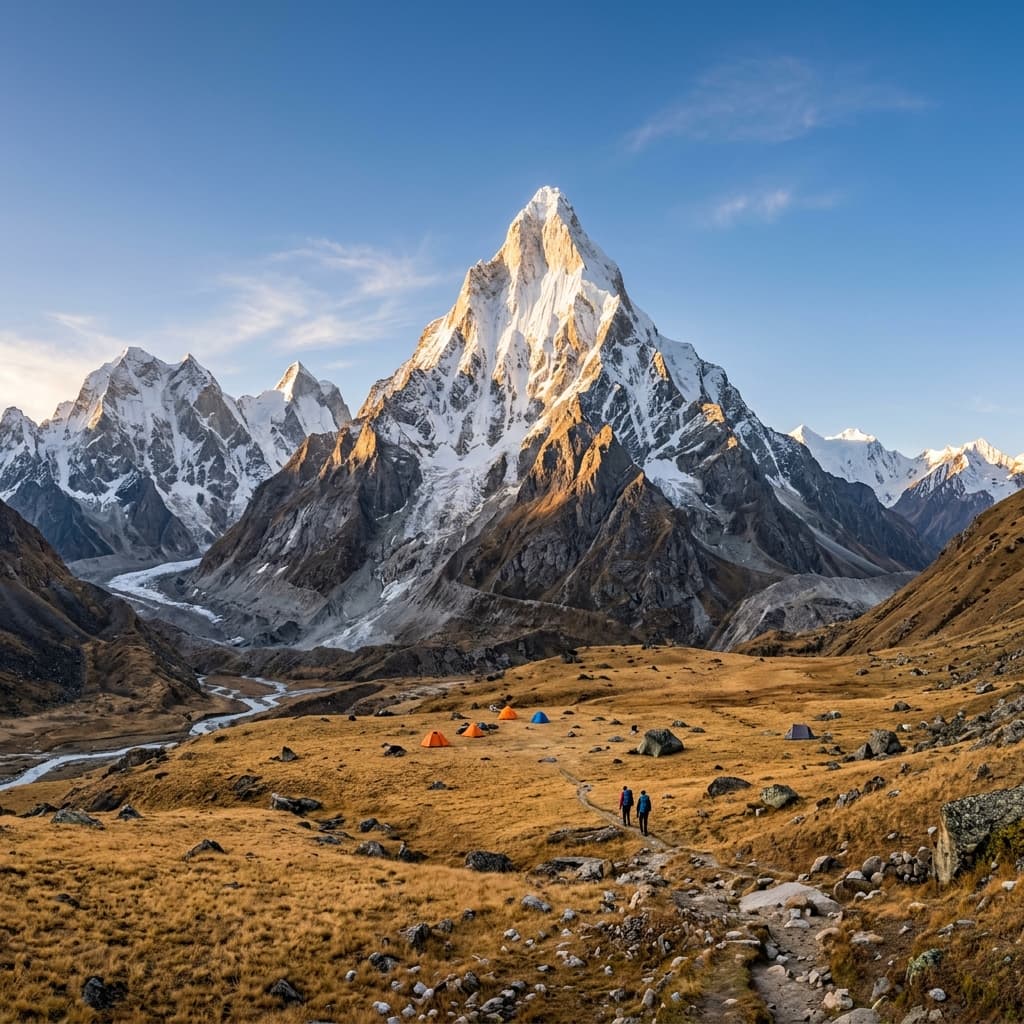
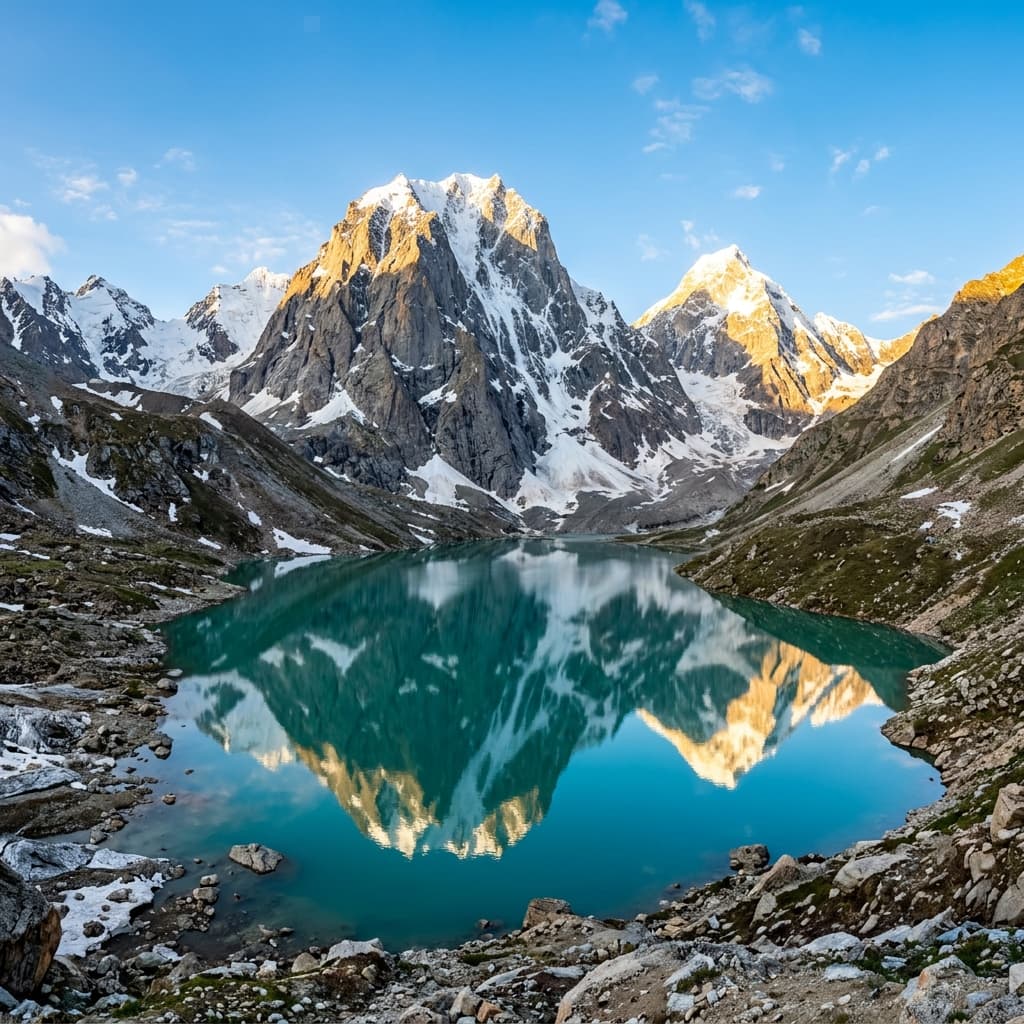
Tucked inside a harsh, glaciated amphitheater in the Garhwal Himalayas lies Kedartal — a glacial lake of striking turquoise emerald at an altitude of 4,750 meters (15,580 feet). Fed by the melting snows of Mount Thalay Sagar, Bhrigupanth, and the Jogin group, this trek is widely considered one of the most intense, raw, and physically demanding high-altitude lake treks in India.
Unlike commercial trails that feature gentle meadow walks, Kedartal demands respect right from step one. You gain over 1,600 meters (5,250 feet) of sheer vertical elevation in just 18 kilometers of climbing out of Gangotri. If you are looking for a true wilderness trek that tests your endurance, scrambling agility, and high-altitude mental grit, Kedartal is the ultimate benchmark.
1. Quick Overview Table
| Key Metric | Details & Ground Reality |
|---|---|
| Trek Region | Gangotri National Park, Uttarkashi District, Uttarakhand |
| Base Camp / Start Point | Gangotri Town (3,100 m / 10,170 ft) |
| Highest Elevation | Kedartal Glacial Lake (4,750 m / 15,580 ft) |
| Total Trail Distance | ~36 km round-trip (Gangotri to Kedartal & back) |
| Trek Duration | 5 to 6 Days (including Gangotri acclimatization) |
| Difficulty Grade | Difficult (Steep gradient, loose scree, Spider Wall cliff crossing) |
| Best Season | Pre-Monsoon (May–June) & Post-Monsoon (Sept–Oct) |
| Forest Permit | Mandatory (Gangotri National Park DFO / Single Window Uttarkashi) |
2. Introduction & Trail Significance
Mythologically revered as 'Shiva's Emerald Lake' (Kedar-Tal), local belief holds that these glacial waters were created by Lord Shiva's penance. Geographically, it is the primary reservoir feeding the Kedar Ganga — a wild, white-water tributary that plunges down a steep gorge to join the sacred Bhagirathi River right at Gangotri Dham.
What sets the Kedartal trek apart from neighboring routes like Gaumukh-Tapovan is its sheer vertical relief. The trail hugs the narrow, V-shaped Kedar Ganga gorge rather than a wide river valley. Standing on the shores of Kedartal puts you directly at the base of Mount Thalay Sagar (6,904 m) — one of the world's most formidable granite spires coveted by elite mountaineers. The sheer proximity to 6,000-meter giants (Thalay Sagar, Bhrigupanth, Jogin I, II, III) creates a feeling of standing in a private Himalayan cathedral.
“Kedartal is not a casual weekend hike. It is a steep, unyielding mountain trial where every footstep must be placed with intention on loose scree and sheer cliff ledges.”
3. Day-by-Day Route Breakdown
Day 1: Drive to Gangotri (3,100 m / 10,170 ft) & Mandatory Acclimatization
Your journey begins with a drive from Dehradun or Uttarkashi along the winding Bhagirathi River through Harsil Valley to Gangotri. Spend the evening walking around Gangotri Temple, attending the evening Ganga Aarti, and letting your lungs adjust to 10,000+ feet. Rest is critical — tomorrow's climb begins immediately with a brutal vertical ascent.
Day 2: Gangotri (3,100 m) to Bhoj Kharak (3,780 m / 12,400 ft) — 8 km (5–6 Hours)
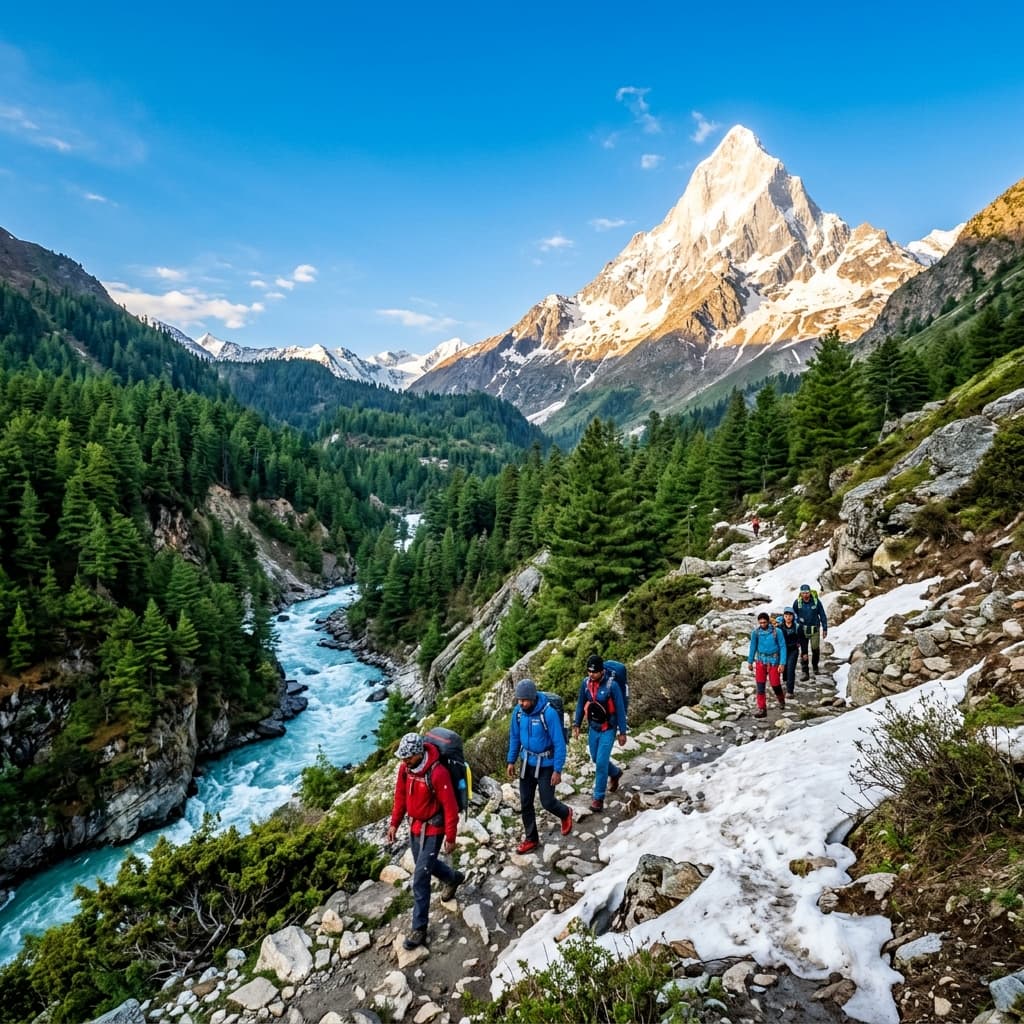
The trek starts right behind the Gangotri temple complex. Within minutes of crossing the Kedar Ganga bridge, the trail plunges into a dense birch (Bhojpatra) and fir forest. The incline is steep from the outset, gaining nearly 700 meters over 8 km.
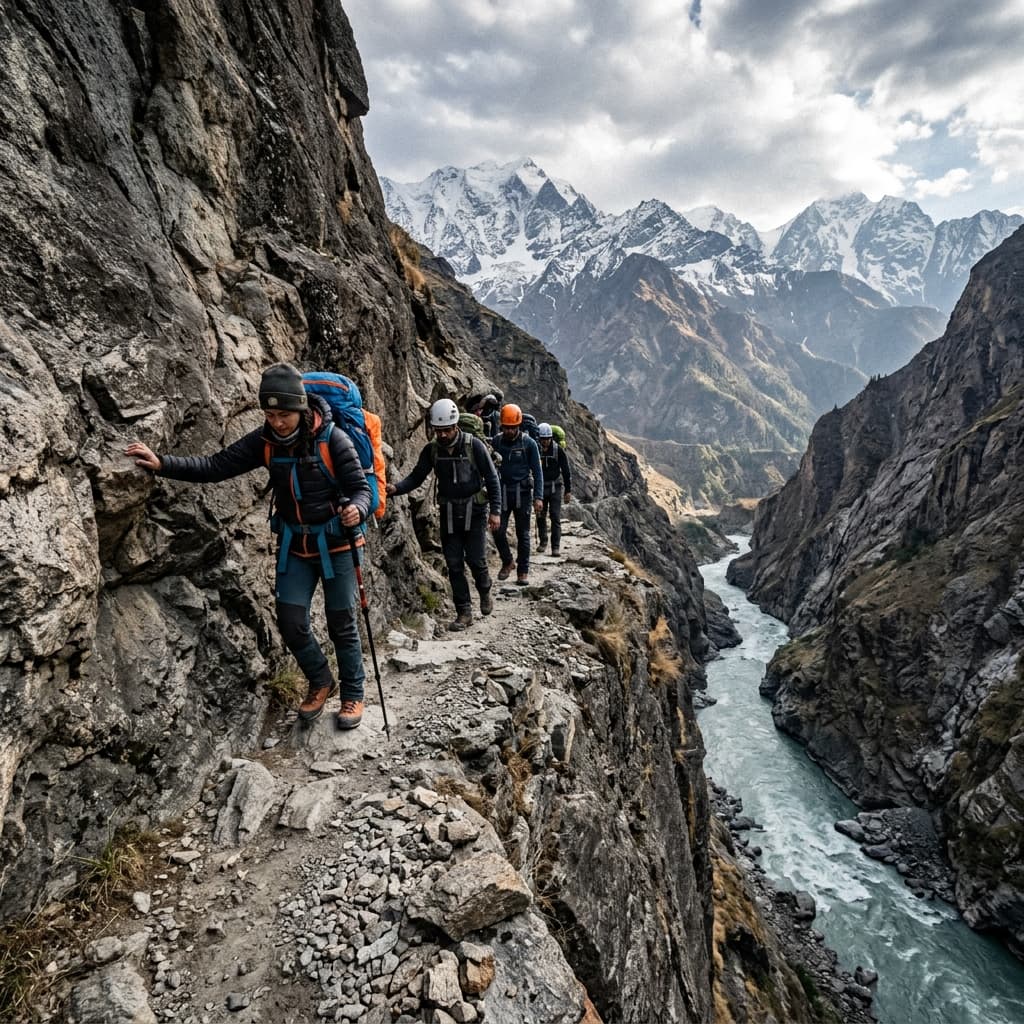
About halfway into the trek, you hit the famous 'Spider Wall' — a narrow, 60-meter stretch of exposed rock ledge with barely enough room for a single boot width, dropping vertically into the roaring Kedar Ganga gorge below. Footing must be deliberate, and trekkers should hold onto fixed ropes or mountain guides. Beyond Spider Wall, the trail opens slightly into Bhoj Kharak, a small campsite carved into a birch grove on a mountain incline.
Day 3: Bhoj Kharak (3,780 m) to Kedar Kharak (4,270 m / 14,000 ft) — 4 km (4–5 Hours)
Though shorter in distance, Day 3 takes you past the tree line into high alpine tundra. The trail leaves the birch forests behind and navigates steep scree slopes and loose boulder fields. Watch out for rockfalls on the exposed stretches.
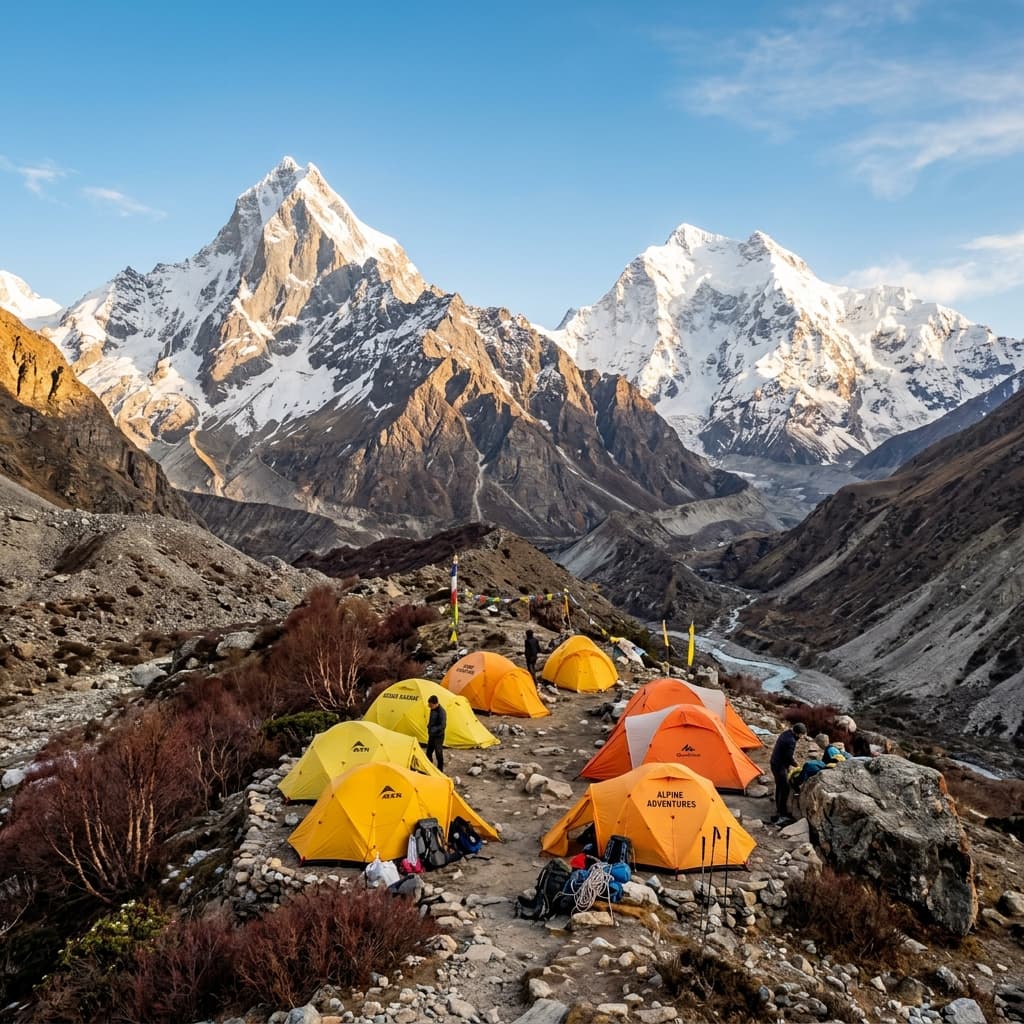
As you approach Kedar Kharak, the narrow gorge opens into a vast alpine meadow surrounded by towering rocky cliffs. Keep an eye on the high ridges — herds of Bharal (Himalayan Blue Sheep) and snow leopard tracks are frequently spotted in this quiet zone. Camping at Kedar Kharak (14,000 ft) gives you your first breathtaking view of Mount Bhrigupanth.
Day 4: Kedar Kharak (4,270 m) to Kedartal (4,750 m / 15,580 ft) & Return to Kedar Kharak — 10 km (7–8 Hours)
Summit Day. Start at sunrise (around 5:00 AM) to negotiate the frozen moraine before the midday sun loosens rocks. The route involves 3 to 4 hours of pure boulder hopping over the lateral moraine of the Kedar Glacier.
The final push is a steep 45-degree climb up a loose glacial ridge. Once you top the crest, the ground drops away into the vast, emerald amphitheater of Kedartal. The absolute stillness of the lake, juxtaposed against the 2,000-meter sheer vertical wall of Mount Thalay Sagar rising directly out of its southern shore, is a sight unmatched anywhere in the Himalayas. Spend 1 to 2 hours exploring the lakeside before descending back to Kedar Kharak for overnight camping.
Day 5 & 6: Kedar Kharak to Gangotri (12 km Descent) & Onward Journey
Descend back through Bhoj Kharak and across Spider Wall back to Gangotri town. The steep descent taxes the knees, so trekking poles are essential. Most teams complete the descent in 6 hours and drive back to Uttarkashi or Dehradun on Day 6.
4. Permits & Forest Regulations
Kedartal lies within Gangotri National Park, which is strictly managed by the Uttarakhand Forest Department. Rules have tightened significantly to preserve fragile high-altitude ecosystems:
- Daily Entry Cap: The Forest Department restricts entry to maximum 150 total trekkers per day across Gangotri National Park trails.
- Compulsory Certified Guide: Since late 2024, trekking solo without a registered mountain guide is illegal in Gangotri National Park.
- Medical Fitness Certificate: Must be signed by a registered MBBS medical practitioner within 7 days of the trek start date.
- Trekking Insurance: Mandatory insurance covering high-altitude search & rescue operations up to 5,000 m.
- Permit Office: Permits can be obtained at the Single Window Clearance counter at the DFO Office in Uttarkashi or Forest Rest House in Gangotri.
As a local operator based in Uttarkashi, The Himalayan Trail arranges all DFO permits, forest green fees, guide allocations, and medical logbooks for our clients in advance.
5. Best Time to Trek
The Kedartal trail is open during two distinct windows each year:
- Pre-Monsoon (May to June): Daytime temperatures range between 10°C to 15°C, while nights drop to -2°C to -5°C at Kedartal. You will encounter patches of hard packed snow around the lake, making the turquoise water contrast dramatically against white ice.
- Post-Monsoon (September to October): Crisp clear atmospheric visibility with zero dust. Daytime temperatures hover around 8°C to 12°C, and night temperatures plummet to -5°C to -10°C. Best window for astrophotography.
- Monsoon (July to August): Strictly Avoid. The steep dirt trail between Gangotri and Bhoj Kharak becomes a active mudslide and shooting-stone hazard zone.
6. Fitness & Altitude Sickness (AMS) Protocol
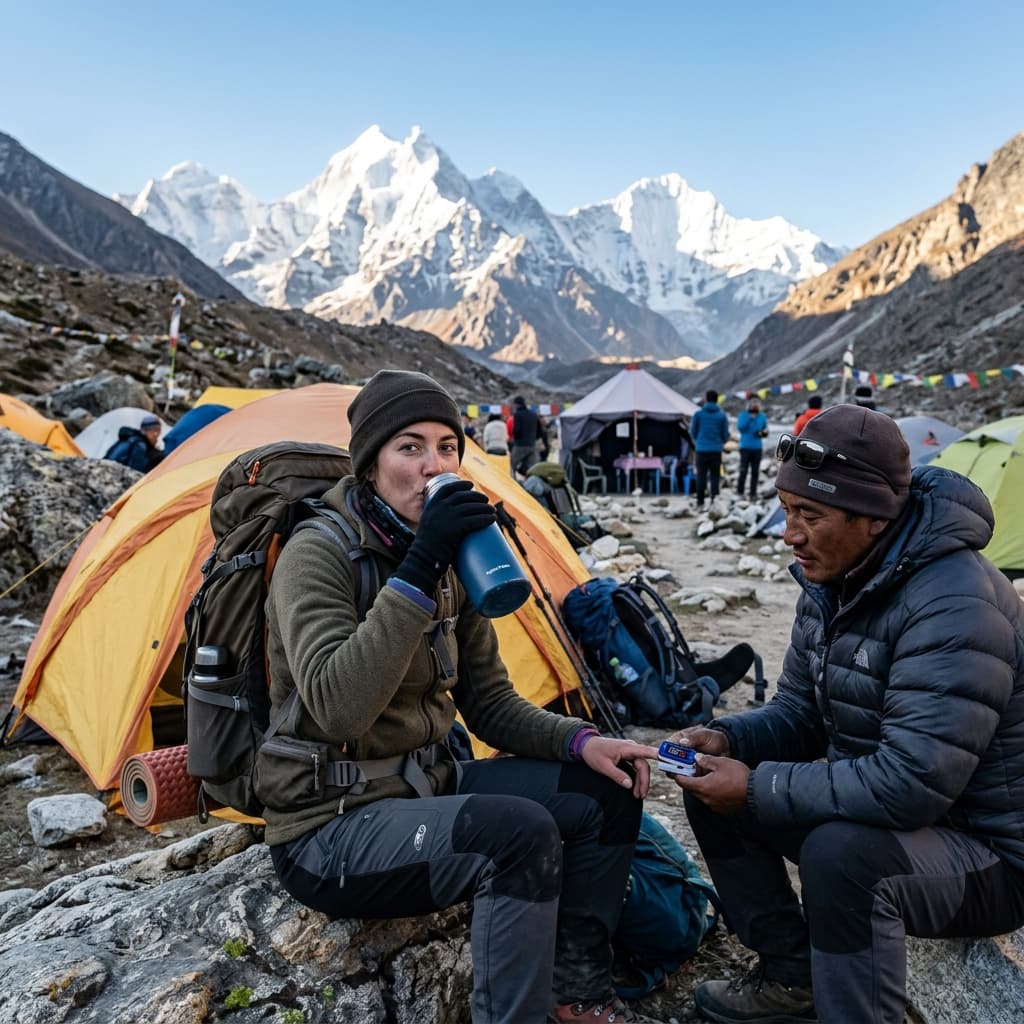
Because you ascend from 3,100 m to 4,750 m over just two days of climbing, Acute Mountain Sickness (AMS) is a real risk on the Kedartal route.
Physical Preparation Baseline
- Cardiovascular Endurance: Be able to run 5 km in under 30 minutes or cycle 15 km continuously.
- Leg Strength & Ankle Stability: 4 to 5 weeks of stair climbing with a 10 kg backpack to condition calves, quads, and ankles for boulder hopping.
- Lung Capacity: Deep breathing exercises (Pranayama) and interval cardio training.
AMS Prevention & Safety Guidelines
- Hydration Rule: Drink a minimum of 4 liters of water daily. Dehydration accelerates AMS symptoms dramatically at 14,000+ ft.
- Pace Control: Walk at a steady, rhythmic pace. Never sprint up steep inclines like Spider Wall.
- Prophylactic Medication: Diamox (Acetazolamide) 125mg twice daily can assist acclimatization, but consult your physician prior to the trek.
- Immediate Descent Rule: If a trekker shows signs of severe headache, nausea, or loss of motor coordination (HAPE/HACE symptoms), immediate descent by 500+ meters is non-negotiable.
7. Gear & Packing Checklist
Temperatures at 15,500 feet regularly drop well below freezing. Having sub-zero rated, lightweight alpine gear is critical for safety:
- 3-Layer Clothing System: Synthetic thermal base layer, heavy fleece mid-layer, and a windproof/waterproof down jacket rated for -10°C.
- Footwear: High-ankle waterproof trekking boots with deep Vibram lug soles (essential for boulder moraine stability).
- Trekking Poles: Pair of sturdy anti-shock aluminum or carbon fiber poles to reduce knee load on steep descents.
- Sleeping Gear: Down sleeping bag rated to -10°C comfort level if trekking unassisted.
- Microspikes & Gaiters: Required during May/early June for snow crossings near Kedartal.
- Headlamp: Minimum 300 lumens with extra batteries for early morning summit pushes.
8. FAQs & Local Tips
Q1: Is Kedartal harder than Gaumukh Tapovan?
Yes. While Tapovan involves a higher maximum altitude, the elevation gain per kilometer on Kedartal is significantly steeper and steeper cliff sections like Spider Wall require more technical footwork.
Q2: Is there mobile network connectivity on the trail?
No. BSNL and Airtel networks work up to Gangotri town. Beyond the Kedar Ganga bridge, there is zero cellular signal.
Q3: Can beginners do the Kedartal trek?
Kedartal is not recommended for absolute first-time trekkers without prior high-altitude (12,000+ ft) hiking experience due to rapid altitude gain and loose moraine terrain.
Q4: Where do we get drinking water on the trail?
The Kedar Ganga river runs alongside the trail up to Kedar Kharak. Always use water purification tablets or portable squeeze filters before drinking.
Ready to take on the Emerald Lake of Shiva? The Himalayan Trail provides certified mountain guides, high-altitude camping gear, DFO permits, and safety logistics out of Uttarkashi. Contact our team to book your departure slot.