
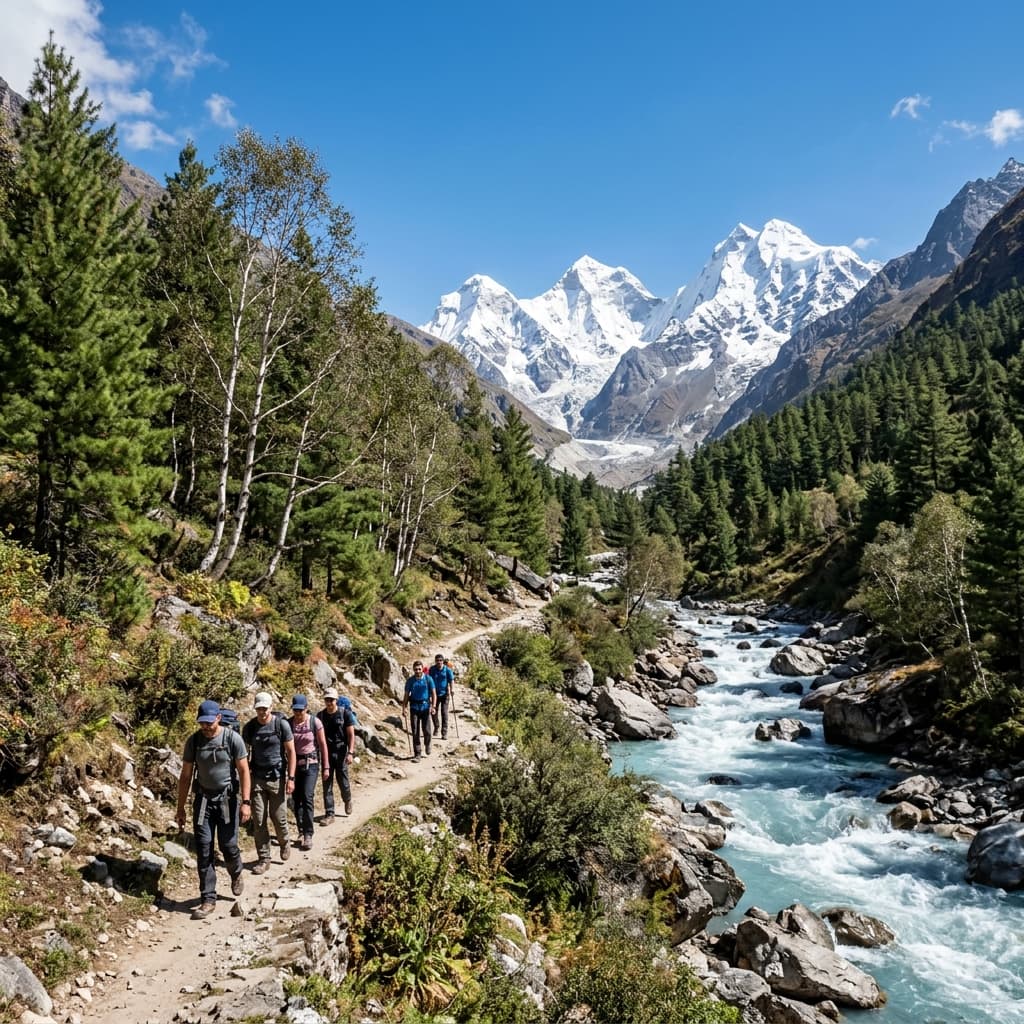
Tucked inside the remote interior of Govind Pashu Vihar National Park in Uttarkashi district, Har Ki Dun — literally translated as 'The Valley of Gods' — is a cradle-shaped hanging valley sitting at an elevation of 3,566 meters (11,700 feet).
Renowned for its deep mythological roots, ancient wooden villages, terraced wheat fields, and roaring Supin River, Har Ki Dun is one of the very few Himalayan treks that seamlessly combines high-altitude wilderness with rich cultural heritage. Standing at the valley head puts you directly in front of the sheer ice wall of Swargarohini (I, II, III) — the legendary mountain where Yudhishthira and his dog ascended to heaven. In this 2026 guide, we explore the trail, ancient architecture, and logistics.
1. Quick Overview Table
| Parameter | Details & Specifications |
|---|---|
| Max Altitude | 3,566 meters / 11,700 feet (Har Ki Dun Valley Head) |
| Base Camp Village | Sankri / Taluka Village, Uttarkashi District |
| Total Trek Distance | ~47 km round-trip |
| Duration | 7 Days (Dehradun to Dehradun) |
| Difficulty Grade | Easy to Moderate (Gradual river valley climb) |
| Key Highlights | Swargarohini Peak View, Osla 500-yr-old wooden village, Jaundhar Glacier |
| Best Season | Spring (April–June) & Autumn (September–November) |
| Forest Permit | Govind Pashu Vihar National Park Entry Fee |
2. Ancient History & Mahabharata Folklore
According to ancient Garhwali folklore, the Pandava brothers spent years in exile wandering through this valley before ascending Swargarohini peak to enter heaven in their mortal bodies. The local inhabitants — the Bhotias of the Supin valley — preserve ancient traditions, wearing hand-woven wool coats (Chola) and celebrating unique festivals.
“Walking through Har Ki Dun is like walking through a living museum of ancient Himalayan architecture and Mahabharata lore.”
3. Day-by-Day Route Breakdown
Day 1: Drive Dehradun to Sankri (1,950 m) — 200 km (7–8 Hours)
Drive through Mussoorie and along the Tons River to reach Sankri base camp.
Day 2: Sankri to Taluka (Drive 12 km) & Trek to Seema / Gangaad (2,400 m) — 12 km
Drive to Taluka village and begin the gentle walk along the left bank of the Supin River through chestnut, walnut, and pine forests.
Day 3: Seema to Har Ki Dun Valley (3,566 m / 11,700 ft) — 11 km (5–6 Hours)
Cross the wooden suspension bridge over the Supin River. Climb past terraced amaranth fields with views of Osla village across the gorge, entering the hanging valley of Har Ki Dun.
Day 4: Exploration Day: Har Ki Dun to Jaundhar Glacier / Maninda Tal — 8 km
Spend the day exploring the Jaundhar Glacier basin under Mt. Swargarohini or walk to the pristine alpine tarn of Maninda Tal surrounded by Brahma Kamal flowers.
Day 5–7: Har Ki Dun to Seema to Taluka & Drive to Dehradun
Retrace the scenic Supin valley trail back to Taluka, drive to Sankri, and return to Dehradun.
4. Osla Wooden Architecture & Culture
Situated across the gorge from Seema, Osla is a 500-year-old village featuring Kath-Kuni earthquake-resistant wooden architecture. The village is famous for its multi-tiered wooden temple dedicated to Someshwar Devta (an incarnation of Lord Shiva).
5. Best Season to Visit
- Spring (April to June): Blooming orchids, green terraced fields, pleasant daytime temperatures (14°C to 18°C).
- Autumn (September to November): Golden harvest fields, crystal-clear skies, and sharp views of Swargarohini peak.
6. FAQs & Heritage Tips
Q1: Is Har Ki Dun suitable for family trekking?
Yes! Har Ki Dun has gentle river valley inclines, making it an ideal choice for families and first-time trekkers.
Experience the cradle of legends with The Himalayan Trail. We offer expert Garhwali guides, heritage village walks in Osla, and camping in Har Ki Dun out of Sankri.